FaceShastra » Face Reading Guide » Face Reading for Wealth
Face Reading for Wealth — the Dhana Seat
चेहरे पर धन योग
Wealth is read at the nose and the cheeks — four separate readings that answer four separate questions: how money arrives, whether it stays, how it is risked, and what standing cushions it. The texts never read 'rich or poor'; they read the shape of the earning. This page walks the whole Dhana seat: what the Bṛhat Saṃhitā says, what each feature is measured for, and three faces read end to end.
What the Dhana seat is
In Sāmudrika Lakṣaṇa, the classical Indian science of bodily marks, wealth is not one sign but a seat — a cluster of features that the tradition reads together. Varāhamihira's Bṛhat Saṃhitā (6th century CE) devotes its chapters on the marks of men and women to feature-by-feature verdicts, and the nose carries the greatest share of the money readings. The reason is practical rather than mystical: the nose is the one feature that changes least with expression, so the old readers treated it as the most stable record of a person's nature.
The seat is called Dhana (wealth) and sometimes Dhana-Lābha (wealth and gain), and its four readings are ordered the way an accountant would order them. First the bridge, which reads how money arrives. Then the nostrils, which read whether it stays. Then the tip, which reads how it is risked — the judgement a person brings to lending, investing and guaranteeing. And last the cheeks, which read the standing and support that cushion money when it fails. A face can be strong in one and weak in another, which is why the readers never summarised the seat into a single word.
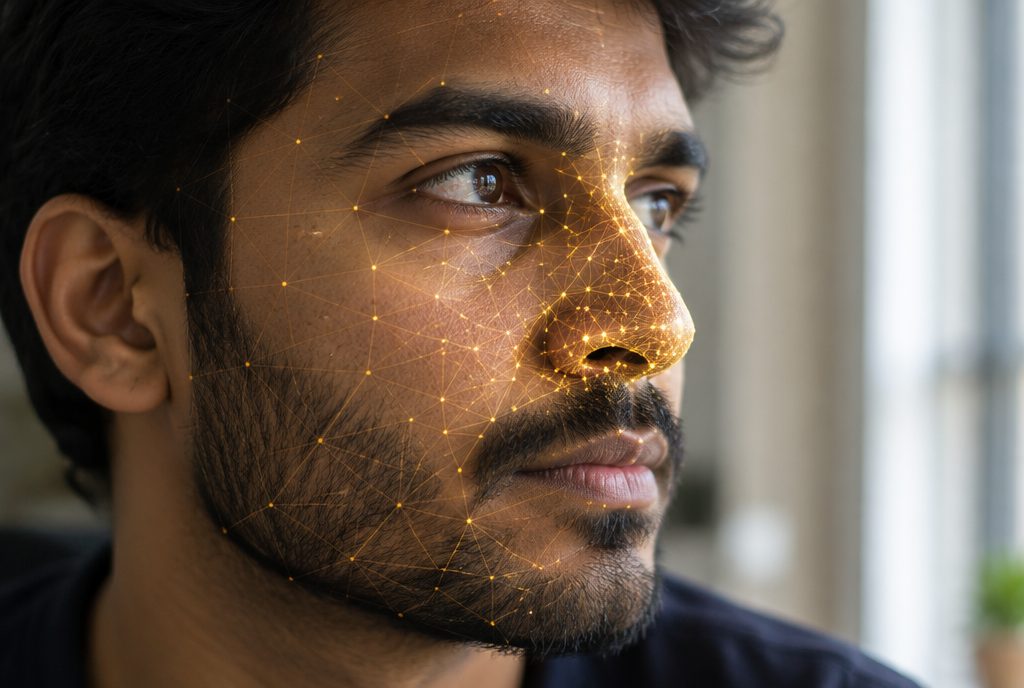
The bridge — how money arrives
The tradition reads the length and line of the nose bridge as the manner of earning. A long bridge is the mark of wealth that builds slowly, over decades, through accumulation rather than windfall; the texts pair it with patience and with a life whose second half is richer than its first. A straight, fleshy bridge is the classic mark — the one every Sāmudrika reader learns first — of money earned by one's own effort, and the Saṃhitā's commentators attach it to the trader and the artisan rather than the heir. A moderate bridge is read as earnings that match effort, steadily; durable wealth is built this way and rarely lost. A short bridge is the cautionary mark: money that arrives in bursts, with long flats between, and the text's advice is the one still given by every good accountant — treat the good periods as the whole year.
The nostrils — whether it stays
Where the bridge reads arrival, the nostrils read retention. The readers looked at how much of the nostril opening is visible from the front. Concealed nostrils are the rarer gift: money stays with the person without effort, and the tradition treats this as a mark of quiet fortune rather than cleverness. Moderate nostrils — the common case — mean money stays only if a system holds it: a habit, a rule, a person who says no. Flared nostrils, visible from the front, are read as money moving through the hands — spent, lent, given — and the remedy the texts imply is the oldest one: fix some where it cannot move.
It is worth saying plainly that the reading is about habit, not virtue. A flared nostril on a generous face is a generous person who needs a locked box; the Saṃhitā is not moralising, it is describing a tendency the person can plan around.
The tip and the cheeks — risk, and the net beneath it
The nose tip is read for money judgement. A lifted tip — the tip sitting slightly above the line of the nostrils — marks judgement that is not swayed by who is asking. A level tip is an even hand; the texts note that such people are asked to hold others' money, and usually are. A dipped tip is the mark to watch: money committed on the strength of friendship, the loan to a cousin, the guarantee for a neighbour. The reading does not say such people are foolish; it says the moment of asking is where their money leaves.
The cheeks close the seat. Full cheeks read as support that arrives through people, especially in the middle years — the network that catches a person when a venture fails. Moderate cheeks mean help comes when asked for, not before. Lean cheeks mean the person builds their own support network, and the texts add a consolation the modern reader will recognise: it serves them better later, because it was chosen.
Three faces, read end to end
A long, straight bridge with concealed nostrils, a level tip and moderate cheeks: this is the face the tradition would call quietly wealthy by fifty. Money comes by effort, stays without effort, is handled evenly, and there is help if asked. Nothing dramatic anywhere — which is the point. The Saṃhitā reserves its strongest wealth readings for faces with no cautionary mark in the seat, not for faces with one spectacular sign.
A short bridge with flared nostrils and a lifted tip: money arrives in bursts and moves through the hands, but the judgement is sound. This is the trader's face, or the performer's — feast and famine, never cheated, never rich for long. The reading's advice writes itself: the lifted tip means this person can be trusted to build the system the nostrils need.
A moderate bridge with concealed nostrils but a dipped tip and lean cheeks: steady earning, good retention, and one door through which it leaves — friendship. With no cushion of standing behind it, a single loan to the wrong person is the story the texts warn about. Here the reading is unusually specific, and unusually kind: this face keeps everything it does not give away.
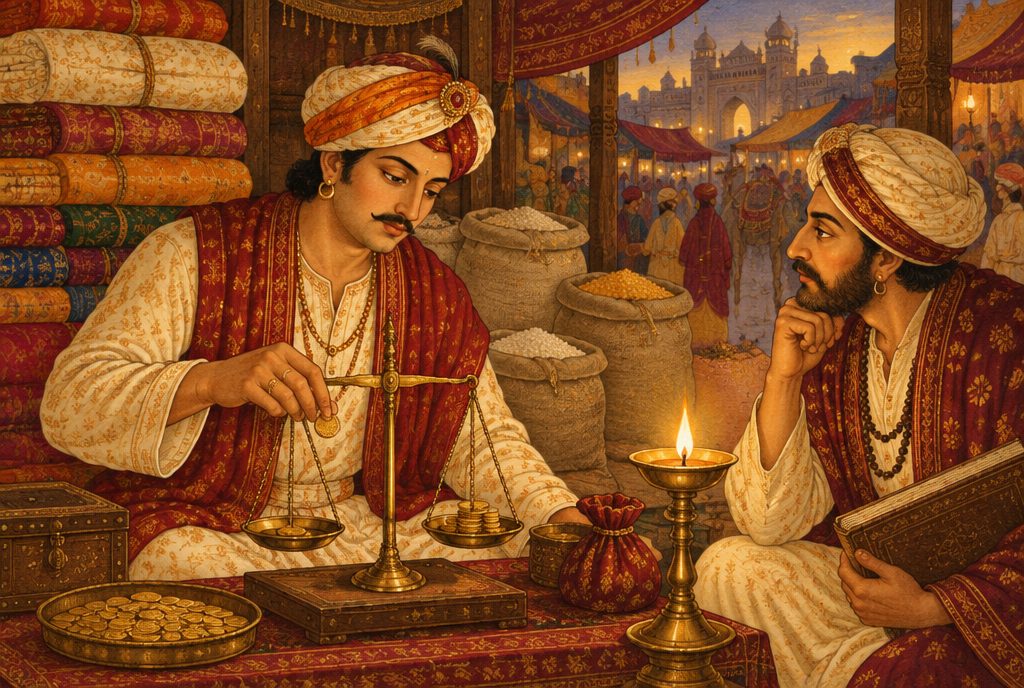
What the seat does not claim
The Dhana seat does not read amounts, dates or windfalls, and no honest reader of the Saṃhitā pretends it does. It reads a shape — how money tends to arrive, stay, and leave — and it reads it as a tendency the person can act on. FaceShastra measures the four features at 478 landmark points and reports, passage by passage, what the classical texts say about each; complexion and skin tone are excluded from every measurement, deliberately and permanently. Whether one accepts the tradition's claims is a separate question from whether they are reported accurately, and this site only promises the second.
Feature by feature — where each reading sits
What does the length of the nose mean for money?
A long nose — wealth builds slowly over decades, not in windfalls. Full readings of this feature →
What do the nostrils say about holding on to money?
Concealed nostrils — the rarer gift: money stays with you without effort. Full readings of this feature →
What does the tip of the nose mean?
A lifted nose tip — your money judgement is not swayed by who is asking. Full readings of this feature →
What do the cheeks say about wealth?
Full cheeks — support arrives through people, especially in your middle years. Full readings of this feature →
Common questions
Which part of the face shows wealth in Samudrika Shastra?
The nose carries most of it — bridge, nostrils and tip — with the cheeks as the fourth reading. The bridge reads how money arrives, the nostrils whether it stays, the tip how it is risked, and the cheeks the support that cushions it.
Does a long nose mean a person will be rich?
The texts read a long bridge as wealth that builds slowly over decades rather than in windfalls. It is a reading of manner, not amount; a long nose with flared nostrils and a dipped tip is read very differently from one with concealed nostrils.
Can face reading tell me when I will get money?
No, and the classical texts do not claim to. The Dhana seat reads tendencies — the shape of earning, keeping and risking — never dates or sums. Treat it as the tradition's description of a habit you can plan around.
Read your own face — free.
Upload a photo; the reading runs in your browser and the photograph never leaves your device. Free summary, no signup to see it.
Get my free reading- Face Reading for Marriage — the Kalatra Seat
- Face Reading for Career — the Karma Seat
- Face Reading for Health — the Ārogya Seat
- Face Reading for Intelligence — the Buddhi Seat
- Face Reading for Love — the Kāma Seat
- Nose Reading — What the Nāsikā Tells About Wealth and Health
- Forehead Reading — Learning, Career and the Temples
- Eyebrow Reading — Attention, Will and Patience
- Eye Reading — Judgement, Attachment and the Marriage Seat